
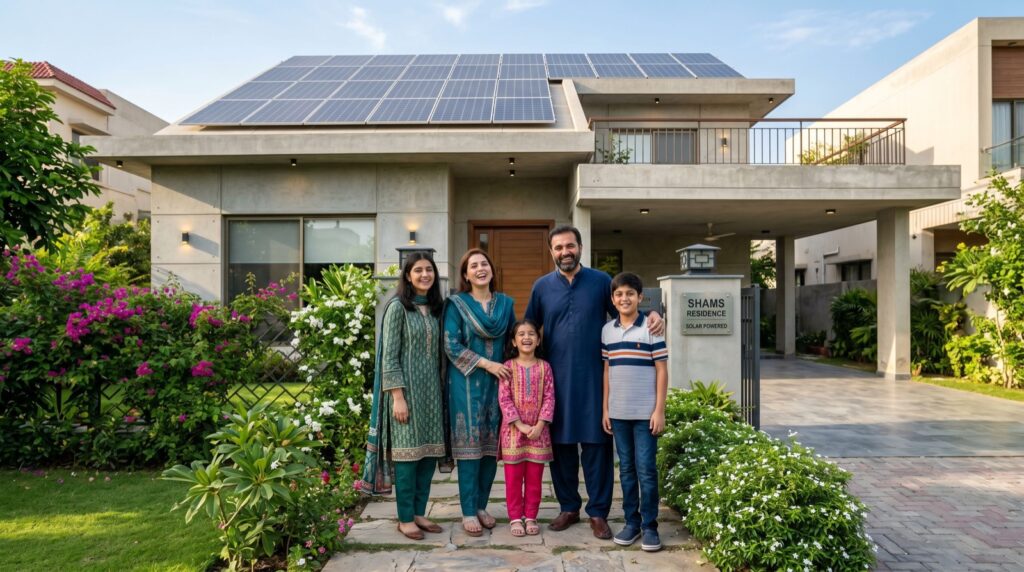
Planning a solar installation in Rawalpindi in 2026 means weighing rising grid tariffs, long summer load-shedding, and a rooftop that bakes under intense sun for most of the year. This guide walks homeowners through the real costs, the equipment choices, and the practical steps that turn a rooftop into a reliable power plant.
Why a solar installation in Rawalpindi pays off faster in 2026
Electricity prices across Pakistan have climbed sharply, and Rawalpindi households now feel every unit on the bill. A well-sized rooftop system offsets the most expensive daytime slabs, which is exactly when air conditioners and pumps run hardest.
The twin cities receive strong irradiance, roughly 5.3 kWh per square meter each day on average. That resource means a modern panel produces meaningful output even in the hazy weeks of monsoon, so payback periods have shortened to around three to five years for many homes.
Net metering also changes the math. When your system sends surplus units to the grid during the day, you bank credits that shave the evening bill. According to the International Energy Agency, solar is now the cheapest source of new electricity in most markets, and Pakistan mirrors that trend.
What does a home solar system actually include?
Buyers often think a solar setup is just panels on a roof. In reality, it is a small system where every part must match the others, or performance suffers.
- Solar panels: Tier-1 monocrystalline modules, usually 550W to 620W each, form the generating surface.
- Inverter: Converts panel DC into usable AC and manages grid interaction. Hybrid inverters add battery readiness.
- Mounting structure: Galvanized or aluminum rails anchored to withstand Rawalpindi wind loads.
- Protection gear: DC and AC breakers, surge protection, and proper earthing for lightning-prone months.
- Optional storage: Lithium batteries for backup during outages.
Sizing depends on your monthly consumption. A family burning 900 units a month typically needs a 7kW to 10kW system, while a compact home might do well with 5kW.
On-grid, off-grid, or hybrid?
On-grid systems are cheapest and pair beautifully with net metering, but they shut off during a blackout for safety. Off-grid systems run on batteries alone and suit remote plots. Hybrid systems, increasingly popular in the twin cities, combine grid savings with battery backup so you keep the lights on during load-shedding.
How much does solar cost in Rawalpindi right now?
Prices move with the rupee and import duties, but the table below reflects realistic 2026 ranges for quality installations. Treat these as planning figures, then confirm with a written quote.
| System Size | Typical Home | Est. Cost (PKR) | Monthly Savings |
|---|---|---|---|
| 5 kW On-grid | Small family, 1-2 ACs | 750,000 – 950,000 | 18,000 – 25,000 |
| 10 kW Hybrid | Large home, 3-4 ACs | 1.8M – 2.4M | 40,000 – 55,000 |
| 15 kW Hybrid | Villa or small office | 2.8M – 3.6M | 65,000 – 85,000 |
Cheaper quotes usually hide the cost somewhere: thinner rails, no-name inverters, or missing surge protection. Because a rooftop system lives outdoors for 25 years, the components that never appear on a glossy brochure often decide whether it survives a decade of Rawalpindi weather.
Choosing the right installer instead of the cheapest one
The panel brand matters, but installation quality matters more. A premium module wired by careless hands underperforms and can even become a fire risk. That is why serious buyers prioritize experienced teams and treat price as a secondary filter.
Reputable providers such as those handling solar installation in Rawalpindi will survey your roof, calculate shade patterns, and hand you a single-line diagram before touching a wrench. That documentation protects you when net metering approval time arrives.
Green flags to look for
- A physical office and verifiable past projects you can visit or call.
- Written warranties on panels, inverter, and workmanship, not just verbal promises.
- AEDB-registered technicians who understand net metering paperwork.
- A load audit that matches system size to your actual bills.
- Transparent pricing that itemizes every component.
Hiring dependable specialists for any technical project follows the same logic: proven experience today prevents expensive callbacks later.
How Rawalpindi compares to other Punjab cities
Homeowners often ask whether prices and performance differ from the provincial capital. In practice, the economics are broadly similar across the province because net metering rules and import costs apply uniformly.
A team that also manages solar installation in Lahore brings standardized procedures and bulk purchasing that keep quality consistent from one city to the next. The main variable is your specific roof, its orientation, and the shade cast by nearby buildings, not the postal code itself.
Maintenance that keeps output high for years
A solar system is refreshingly low-maintenance, but “low” is not “zero.” A little routine care preserves the return you paid for.
Dust is the biggest yield thief in the twin cities. A gentle rinse with soft water every four to six weeks, ideally in the cool early morning, restores lost output. Avoid harsh brushes that scratch the anti-reflective glass coating.
Monitoring is the second habit worth building. A good inverter app shows daily generation, so a sudden drop flags a fault before it costs you a full billing cycle. Keep an eye on the trend, not just the daily number.
The installation timeline step by step
A straightforward residential job in Rawalpindi moves quickly once the survey is done. Knowing the sequence helps you plan around it.
- Day 1: Site survey, roof measurement, and shade analysis.
- Days 2-3: Design finalization, equipment procurement, and quote sign-off.
- Days 4-6: Mounting structure installation and panel placement.
- Days 6-7: Inverter wiring, earthing, and system commissioning.
- Weeks 3-8: Net metering application and meter replacement by the DISCO.
The physical work is fast. The paperwork for grid connection is the slow part, so start the net metering file early. Global capacity data from IRENA shows how quickly households worldwide are adopting rooftop solar, and Rawalpindi is riding the same wave.
Frequently Asked Questions
How long does a solar installation in Rawalpindi take?
The rooftop work usually finishes in four to seven days for a typical home. Net metering approval and meter swap by the distribution company can add three to eight weeks, so budget for that separately.
Will solar panels work during load-shedding?
Only if you have a hybrid or off-grid system with batteries. A basic on-grid system shuts down during a blackout for safety, so choose a hybrid inverter if uninterrupted backup is your priority.
How many panels does a 10kW system need?
With 580W modules you would install roughly 17 to 18 panels. The exact count depends on the wattage rating and your available shade-free roof area.
Do I need to clean the panels often?
In Rawalpindi’s dusty seasons, a gentle rinse every four to six weeks keeps output high. A light layer of dust can cut generation by five to ten percent if left for months.
Ready to power your home with the sun?
A solar installation in Rawalpindi is one of the few upgrades that pays you back every single month while shielding you from the next tariff hike. Start with a proper load audit, insist on quality components, and choose an installer who documents everything. Get a written quote today and turn your rooftop into a 25-year asset.