Online Tutoring: How It Lifts Grades and Confidence
Online tutoring has changed the story of the struggling student. The child who once dreaded raising a hand in a packed classroom now asks question after question on a private video call, with no fear of being judged. That shift in confidence, more than any single lesson, is why families keep coming back to the screen in 2026.
This article looks past the hype at what actually happens when a student trades the crowded academy for focused, one-to-one online tutoring — the psychology, the mechanics, and the measurable results.
Why One-to-One Attention Changes Everything
A typical classroom splits one teacher across thirty students. A tutor splits nothing. Every minute targets one learner’s exact gaps, and that concentration is the engine behind faster progress.
Researchers have long documented the “two sigma” effect, where one-to-one instruction dramatically outperforms group teaching. The OECD has repeatedly highlighted how personalised support narrows learning gaps, and online tutoring finally makes that support affordable and scalable.
- The tutor spots misconceptions the same day, not at the next test.
- Pace adjusts to the student, not the syllabus calendar.
- Shy learners speak up because no classmates are listening.
- Sessions record automatically for stress-free revision.
The Confidence Loop
Grades and confidence feed each other. A student who understands one topic attempts the next with less fear, which leads to another small win. Online tutoring accelerates this loop because the private setting removes embarrassment from the equation.
Choosing the right service is the first step, and families increasingly look for an experienced local team that understands the Pakistani curriculum rather than a random freelancer found on social media. Consistency of teacher matters — the same tutor week after week builds trust.
What Does a Great Online Session Look Like?
Structure separates a productive session from an expensive chat. The best tutors follow a rhythm that keeps the student active for the full hour.
- Quick recap: two minutes on last week’s key idea.
- Focused teaching: one clear concept, shown on a whiteboard.
- Guided practice: the student solves while the tutor watches.
- Independent attempt: a problem tackled alone.
- Summary and homework: a two-line takeaway and a task.
For students who want to go beyond the school syllabus, structured online learning courses add depth in areas like coding, English fluency, or exam strategy that a single subject tutor may not cover.
Online vs Traditional Academy: A Quick Comparison
| Factor | Online Tutoring | Physical Academy |
|---|---|---|
| Attention | One-to-one | One-to-many |
| Commute | None | Daily travel |
| Revision | Recorded sessions | Own notes only |
| Teacher choice | Nationwide pool | Local only |
| Flexibility | High | Fixed timetable |
Subjects Where Online Tutoring Excels
While almost every subject works remotely, a few see the sharpest gains. Mathematics benefits from live step-by-step working. English speaking improves because the student talks far more than in a group. Exam-focused coaching thrives on targeted past-paper drills.
Reliable providers like professional online tutoring services match each student to a subject specialist, which is far more effective than one generalist stretched across every topic.
The Technology That Makes It Work
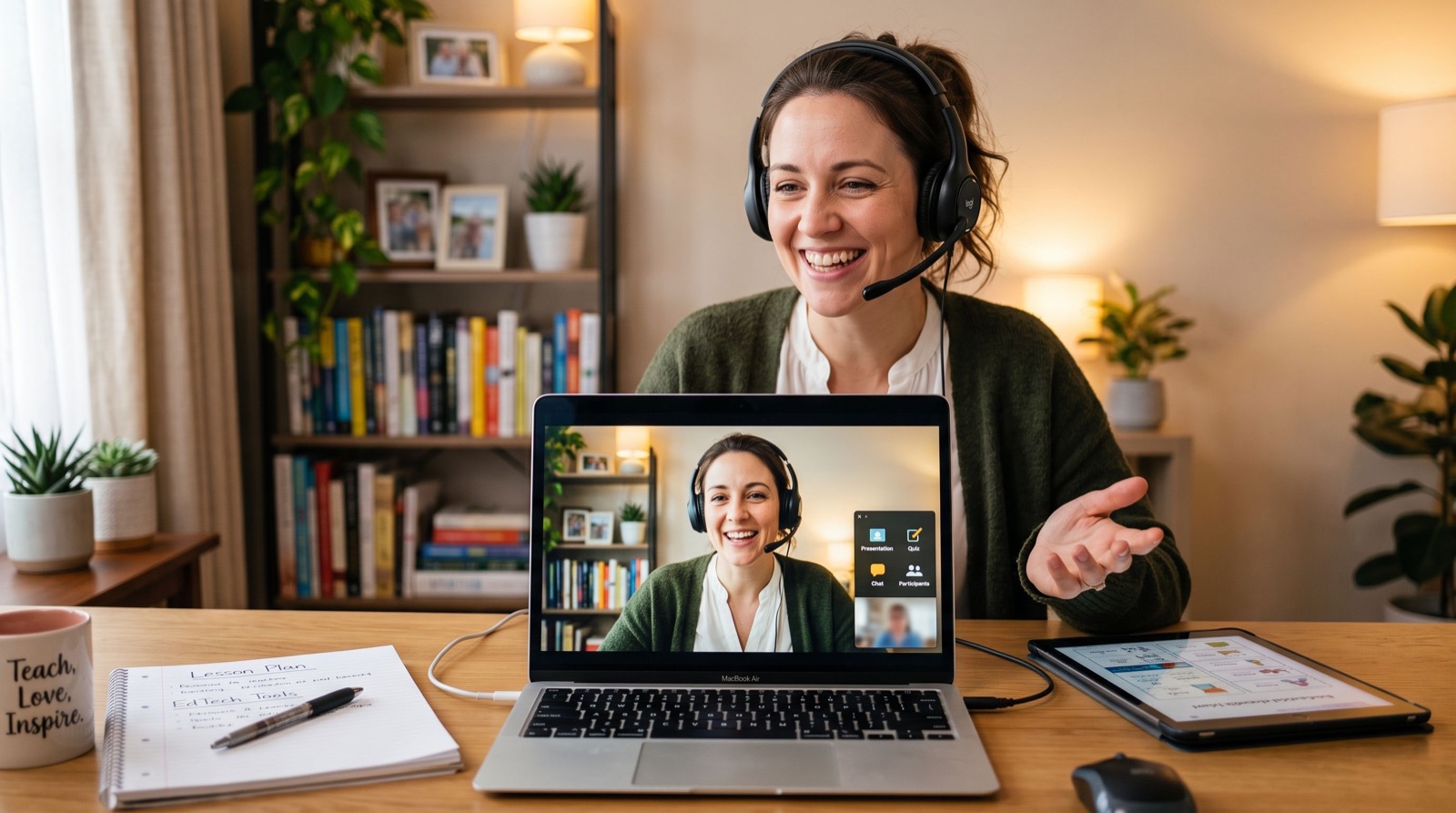
Modern online tutoring runs on tools that would have amazed a classroom a decade ago. A shared digital whiteboard lets the tutor draw, annotate, and solve problems in real time while the student watches every stroke. Screen sharing turns a physics simulation into a live demonstration.
Recording is the quiet hero. A student who missed a step can replay the exact moment during revision, something a live classroom can never offer. Interactive quizzes give instant feedback, and shared documents keep every worked example in one searchable place.
- Digital whiteboard: step-by-step working, saved for later.
- Screen share: simulations, past papers, and diagrams.
- Session recording: unlimited revision on demand.
- Shared notes: one organised place for every lesson.
None of this replaces a good teacher, but it multiplies what a good teacher can do. The technology removes friction so the human attention lands with full force.
Building a Weekly Rhythm With Your Tutor
Consistency turns isolated sessions into real momentum. The families who see the biggest gains treat tutoring as a fixed part of the week, not an occasional rescue when a test goes badly.
- Set fixed slots: same days and times every week.
- Prepare questions: the student lists doubts beforehand.
- Complete homework: practice between sessions cements learning.
- Review together: parent, student, and tutor check progress monthly.
This rhythm removes the last-minute scramble and replaces it with steady, visible improvement — the kind that shows up on report cards a term later.
Measuring Real Progress
Feelings are not enough — track the numbers. Keep a simple log of test scores before tutoring begins and review it every four weeks. A good tutor welcomes this scrutiny and sends short written updates after key milestones.
Warning signs of a poor fit include vague feedback, cancelled sessions, and a student who dreads the class. Any of these justify a switch. The right match usually shows visible improvement within six to eight weeks.
Celebrate the small wins along the way. A jump from 55 to 68 percent is real progress worth acknowledging, even if the target is higher. Recognising momentum keeps a student motivated through the long middle stretch where enthusiasm often dips.
Involve the school teacher where possible. When the tutor and classroom teacher align on weak areas, the student hears one consistent message instead of two competing ones, and revision time is spent where it truly counts.
Frequently Asked Questions
Does online tutoring really improve grades?
Yes. One-to-one attention targets a student’s specific weaknesses, and most families see measurable improvement within six to eight weeks when sessions are consistent and well structured.
At what age can a child start online tutoring?
Children as young as seven can benefit in short, interactive sessions. Older students in matric, O Level, and A Level see the fastest exam-related gains.
What if my child is shy or lacks confidence?
Online tutoring often suits shy learners best. The private setting removes classroom pressure, so students ask more questions and build confidence faster than in a group.
How many sessions per week are ideal?
Two sessions per subject each week is a common sweet spot — enough to maintain momentum without overwhelming the student’s schedule.
The Bottom Line
Online tutoring works because it does one thing exceptionally well: it puts a knowledgeable teacher’s full attention on a single student, in a setting where that student feels safe to try, fail, and try again. In 2026, that combination of focus and comfort is the clearest path from struggling to succeeding.
Start with a clear goal, choose a verified tutor, and track the results honestly. The grades will follow the confidence, and the confidence follows the attention only online tutoring can reliably deliver.