Queue Management System in Saudi Arabia: Public Sector 2026
Government service centers are often the first place citizens judge how modern a country feels, which is why a reliable queue management system in saudi arabia has become essential infrastructure for public offices in 2026. From municipal counters to licensing halls and utility payment centers, orderly, transparent queueing turns long, frustrating visits into quick, dignified transactions. This guide looks at how the public sector is deploying the technology and what lessons translate to fast-growing cities elsewhere.
Public offices face a unique pressure. They cannot turn customers away, demand varies wildly across the month, and fairness must be visible to everyone in the room. A structured queueing platform answers all three challenges at once, which is why adoption across the Kingdom’s e-government push has been so rapid.
Why a Queue Management System in Saudi Arabia Suits Government Offices
Vision 2030 made citizen experience a national priority, and service centers are the front line of that promise. When a resident arrives to renew a document or pay a fee, the difference between a 10-minute visit and a two-hour ordeal shapes their trust in the entire system. Structured queueing replaces the old free-for-all with a clear ticket, a visible position, and a fair, auditable order.
It also gives supervisors real control. Instead of guessing why a hall is backed up, they see live counter performance and can redeploy staff instantly. Over weeks, the data reveals which services need more capacity and which processes should be simplified or moved online.
Public Sector Benefits That Citizens Notice
Service centers that modernize their queues report clear, visible gains:
- Transparent fairness: Everyone sees the order, ending disputes and favoritism.
- Shorter perceived waits: Clear updates reduce the frustration of uncertainty.
- Service-specific routing: Citizens reach the right counter the first time.
- Priority lanes: Seniors and people with disabilities are served promptly.
- Performance accountability: Supervisors track service times per counter and per agent.
- Multilingual prompts: Arabic and English support a diverse resident and expatriate population.
How a Government Queue Flow Works
The mechanics are straightforward, but the discipline behind them is what delivers results. A good public-sector deployment feels effortless to the citizen while giving managers deep visibility.
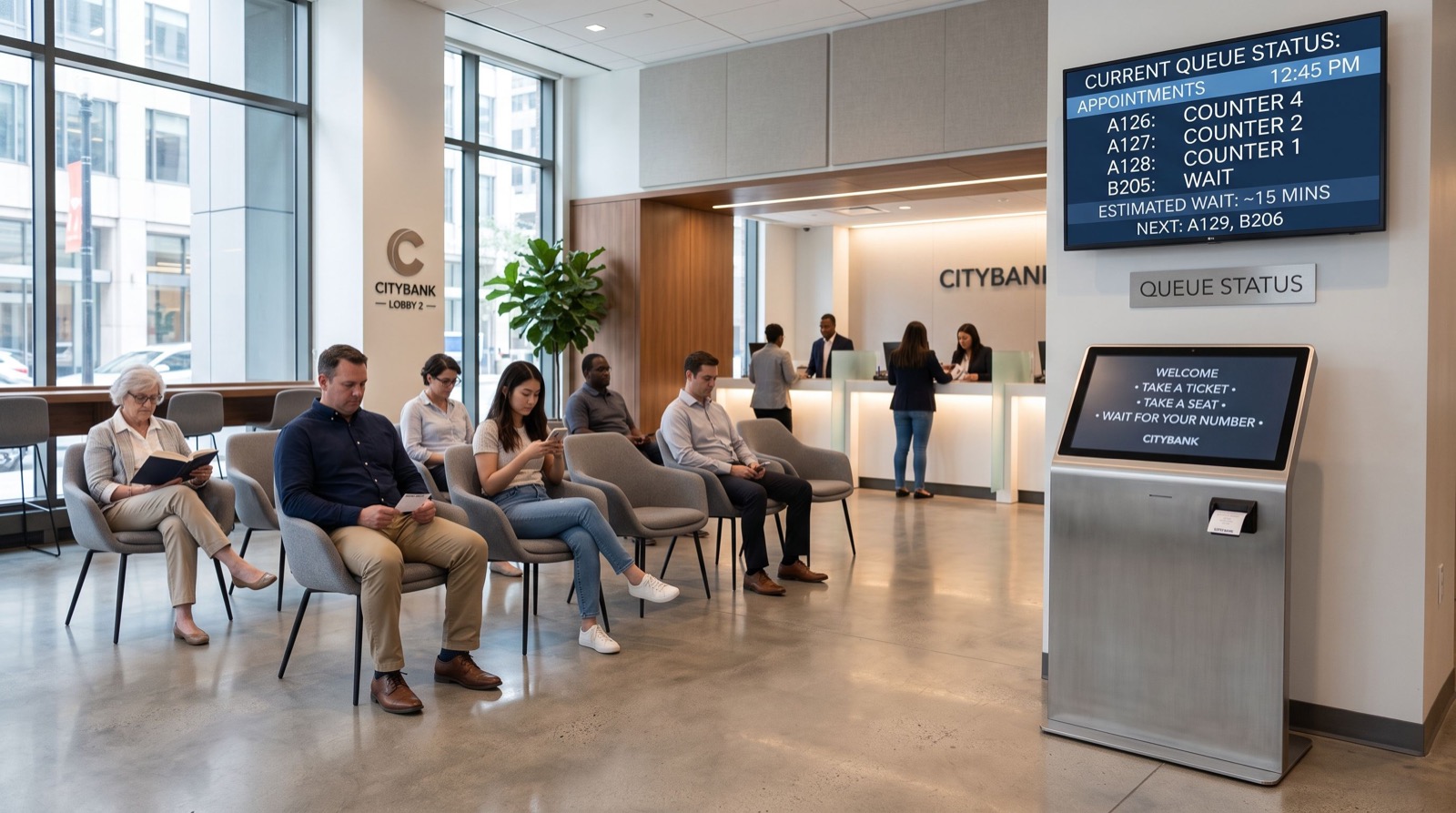
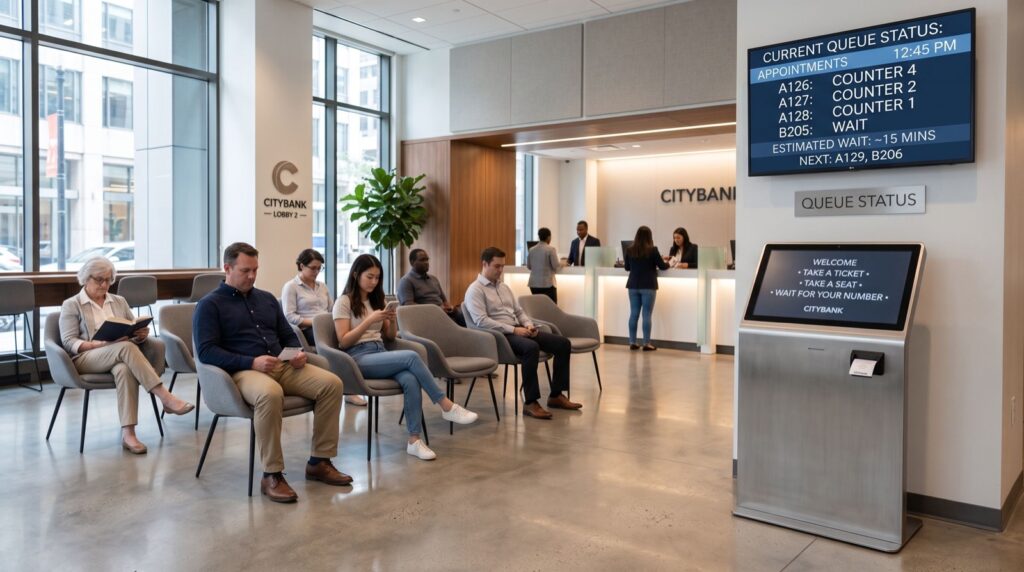
- Ticket issue: A kiosk asks the citizen to select a service and prints or sends a numbered ticket.
- Intelligent sorting: The engine orders tickets by service type and priority status.
- Display and call: Large screens and audio announcements direct citizens to the right counter.
- Agent handling: Staff call, serve, transfer, or recall with a single console.
- Reporting: Supervisors review wait times, service durations, and no-shows to refine staffing.
Lessons That Travel: From Riyadh to Karachi
The principles proven in Saudi service centers apply directly to other fast-growing cities. In Pakistan, for example, demand for a modern queue management system in karachi is climbing as banks, utility offices, and private clinics face the same crowding pressures. The technology is identical; only the volume patterns and languages differ. Organizations that study mature Gulf deployments can leapfrog early mistakes and roll out proven configurations from day one.
The biggest transferable lesson is simple: technology alone does not fix a queue. Process discipline, honest demand data, and staff training decide whether a system delivers its promise or gathers dust.
Comparing Service-Center Configurations
Public offices vary enormously in scale, so the right setup depends on daily footfall and the number of distinct services offered.
| Configuration | Best Fit | Key Strength | Counters |
|---|---|---|---|
| Basic | Small municipal desk | Single-service ticketing | 1 to 3 |
| Multi-service | District office | Service routing and priority | 4 to 12 |
| Centralized | City-wide network | Unified reporting across sites | 12+ |
Centers should size for payday-week peaks and month-end deadlines, not quiet mid-month mornings. Planning around the busiest realistic day prevents the frustration that erodes public trust.
Implementation Advice for Public Managers
Start with a short pilot at one busy counter group rather than a full building rollout. A pilot proves value, surfaces process gaps, and builds staff confidence before the wider launch. Map the citizen journey during a genuine peak, and look for the single service that generates most of the backlog.
Train every agent to close each transaction in the console consistently, because the analytics are only as honest as the discipline behind them. Then review reports weekly at first, adjusting staffing and signage as patterns emerge. Small, data-led tweaks usually outperform expensive expansions.
For public bodies and private service firms that also want to communicate improvements to residents online, teaming with quality service providers helps turn operational wins into visible community trust and steady engagement.
International service-design research, including work shared by the OECD on citizen-centered public services, confirms that reducing friction at the front counter directly raises trust in government institutions.
There is also a quiet cost-saving story here. When citizens reach the correct counter the first time and transactions are logged automatically, staff spend far less time redirecting people and reconciling paper records. Those recovered minutes add up across a busy office, letting the same team serve more residents without overtime. Over a full year, the efficiency gains frequently cover the cost of the system several times over, which is why finance teams, not just operations managers, increasingly champion these deployments.
Frequently Asked Questions
How does queueing improve fairness in public offices?
Because every ticket is numbered and the calling order is visible on screen, citizens can see exactly where they stand. This transparency removes the suspicion of favoritism that undermines trust in manual systems.
Can one system manage many different services?
Yes. Multi-service configurations let a citizen choose their purpose at check-in and route them to the correct specialized counter, avoiding the wasted trips between desks that plague unstructured halls.
What happens when a citizen misses their call?
Agents can recall a skipped number or requeue it with a short delay, so a brief absence does not force the person to start over, while still keeping the overall order fair.
Is the technology hard for older citizens to use?
No. Kiosks use large, simple icons in Arabic and English, and reception staff can issue tickets manually, ensuring no one is excluded by the technology.
Conclusion: Public Service Worth the Visit
In 2026, citizens measure government by the quality of everyday interactions, and the service counter is where that judgment forms. A well-chosen queueing platform delivers fairness, speed, and accountability while giving managers the data to keep improving. If your office is ready to replace crowded, uncertain waiting with a transparent, efficient experience, the time to act is now. Request a tailored public-sector queueing consultation today and give every citizen the respectful service they expect.